Helgoland 2026
For the seventh time we visited Helgoland. The first day we had a strong wind from the north but from Sunday started to shift to the east and started to drop. This brought in many birds with mass arrival of Buzzards and Wood Pigeons. The number of Chaffinches, Bramblings, Redwings and Chiffchaffs started to grow and also some rarities where found including Pallas's Wabler, Isabeline Wheatear, Pine Bunting and we found a Dusky Warbler, Siberian Chiffchaff, Rough-legged Buzzard and a extreme late Grasshopper Warbler.

Saturday 17.10.2026
After yesterday’s drive and overnight stay in Bremerhaven, we headed to Cuxhaven early in the morning. On the way, we kept an eye out for Cranes in the fields and sky, spotting about a hundred across several flocks flying over the road.
We arrived at the ferry, which turned out to be very busy because the catamaran had been cancelled and all its passengers had to convert their tickets for the regular boat. After a 1.5-hour delay, we left the harbour. It was quite windy with a sizable swell, and the crew handed out sick bags at every table.
Throughout the passage, we scanned the sea, but it was a bit disappointing, we saw only the usual Common Scoters, a few Little Gulls, and a single Kittiwake that trailed the ferry for a short while.
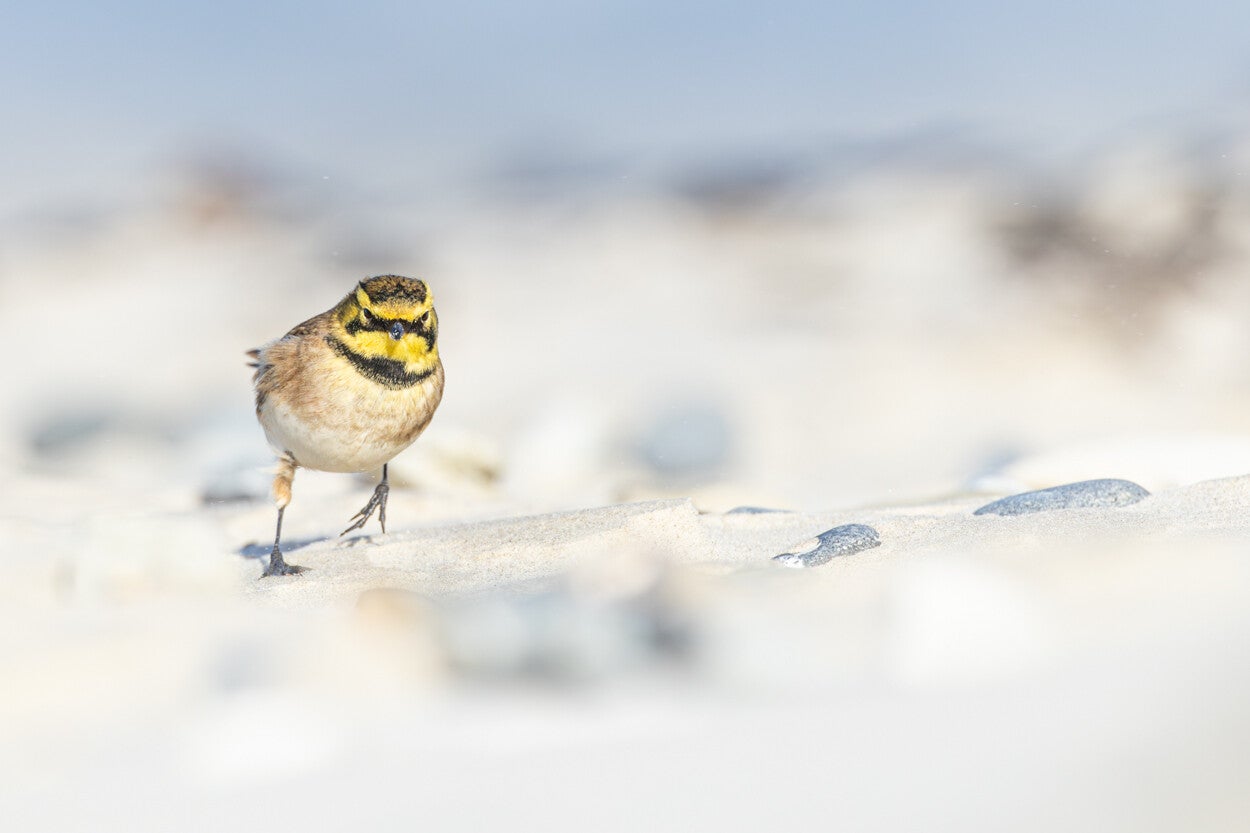
When we arrived at Heligoland, the first Horned Larks flew overhead, and a Northern Wheatear was at the pier. While waiting for our luggage, we spotted three Horned Larks foraging on a fenced-off field. There was a lot of construction work underway, and all the once-promising fields in the harbour were either fenced off or active construction sites, which was a bit depressing to see.
Once we retrieved our luggage, we hauled ourselves up the stairs to “Oberland,” where our apartment at Haus Nordlicht was located for the next few days. After grabbing some groceries and refreshing ourselves, we headed out with a warm cup of coffee in hand.
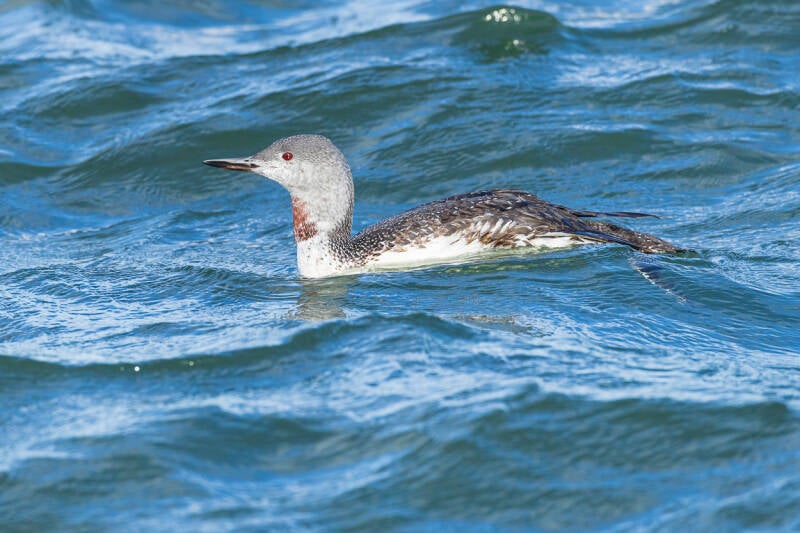
We walked down to Kurpark to try for the Olive-backed Pipit, but it had flown off before we arrived. We did hear a Bullfinch calling overhead, though. We photographed a Red-throated Diver in the harbour to ensure we had some photos. A report of a Pallas’s Warbler sent us back up the way we came, and we managed to connect with this pretty warbler. We then checked out “Mittelland” and “Kringel.” There were plenty of birds around, though all were regular migrants.
Because of the overcast weather, it was already getting dark, so we called it a day and enjoyed a nice dinner at the Aquarium restaurant.
Sunday 18.10.2026
Due to strong northern winds, we started at the more sheltered Kurpark, where we found a pale redpoll showing features of a Coues's Arctic Redpoll. Although we heard that the north beach had been quiet the previous day, we decided to check it out anyway. We found some Chaffinches, Bramblings, and a trio of Horned Larks.
With the northern wind blasting us on the beach, we moved to the other side of the island, stopping by the apartment for coffee and biscuits. At Mittelland, we flushed a Yellowhammer that perched nicely for us.
While checking out Kringel, we saw a few Buzzards passing by, and their numbers grew by the minute. The wind had shifted more to the east, so they were likely blown out to sea and seeking shelter on the leeward side of the island. Last year we experienced a mass arrival of Sparrowhawks; now the same thing was happening with Common Buzzards and large flocks of Wood Pigeons. To get flight shots of the birds from above, we moved up to the cliffs. Joining the Buzzards were several Kestrels, Sparrowhawks, three Hen Harriers, a Marsh Harrier, and two Merlins, all finding temporary shelter behind the island before continuing on to the mainland.
At the dirt dump near the construction site, we found a juvenile Golden Plover. While Hans worked on photographing the plover, I focused on the Buzzards gliding past the cliffs until it became too dark for decent shots.

Monday 19.10.2026
The wind dropped a bit overnight, but it was still strong enough that the ferry to Düne had to depart from the other, more sheltered harbour. We began a counter-clockwise loop around the island, but found an empty south beach with only a few Grey Plovers and Ringed Plovers resting near the Grey Seals.
Due to the strong winds, the usually quiet east beach looked even less inviting. A flock of Barnacle Geese and Greater White-fronted Geese was resting on the runway. Meanwhile, a flock of Bramblings was feeding on seeds in the dunes, regularly taking flight and looping back into the wind before landing, but there was no sign of the Lapland Bunting reported the previous day. Adding to our disappointment, the airport restaurant was closed, leaving us without our planned “Kaffee und Kuchen.”
On the more sheltered North Beach, we spent time photographing Purple Sandpipers and Redwings foraging among the rotting seaweed. A male Snow Bunting was also feeding on the beach, surprisingly bold. That wasn't the case for the Horned Larks, but with a bit of patience, they also walked towards us into the blasting wind and sand.
As the wind dropped, emerging flies took to the air, where a flock of Starlings awaited them downwind, hopping and snapping insects right out of the sky. We decided to head back to Heligoland, but just missed the ferry. While Hans went to the restroom—often the exact moment something good shows up—I walked back to check a few bushes and caught a familiar ticking call. A Dusky Warbler was calling from a blackberry bush before flying across the path to land in some small willows. I reported the sighting in the group chat, and within moments, birders began to arrive. Overhead, we also caught sight of a Rough-legged Buzzard. After 20 minutes, the Dusky Warbler called again, and we left the site as nearly 100 birders gathered.
Back on the main island, we tried for the Olive-backed Pipit again, but it remained out of sight. We then headed to the North Beach to photograph Chaffinches and Bramblings in the warm autumn light. When news of an Isabelline Wheatear came in, we climbed the Jägersteig stairs to the top of the island. We quickly spotted the crowd of birders and the bird itself, though it remained quite distant at first. After checking the cliffs with little luck, we returned to the Isabelline Wheatear, which had moved close to the track right where we had photographed the Golden Plover the day before.
We positioned ourselves nearby, hoping the bird would move closer into the open. We were in luck—it did exactly what we hoped, allowing us to get great photos and even a few head-on flight shots.
Suddenly, a bunting flew overhead, giving a long call similar to a Yellowhammer's, but not quite matching. I couldn't get the bird in frame, but luckily another birder captured it, and it turned out to be a Pine Bunting!
A follow-up search of the area was unsuccessful, though it was seen dropping down near the ringing station. The searching party flushed a Short-eared Owl along the way, and with the light fading, we called it a day.

Tuesday 20.10.2026
Having missed our “Kaffee und Kuchen” the day before, we headed back out to Düne, starting directly at the north beach. Several Chaffinches, Bramblings, and Redpolls were perched on the branches installed to shelter the dunes from wind erosion.
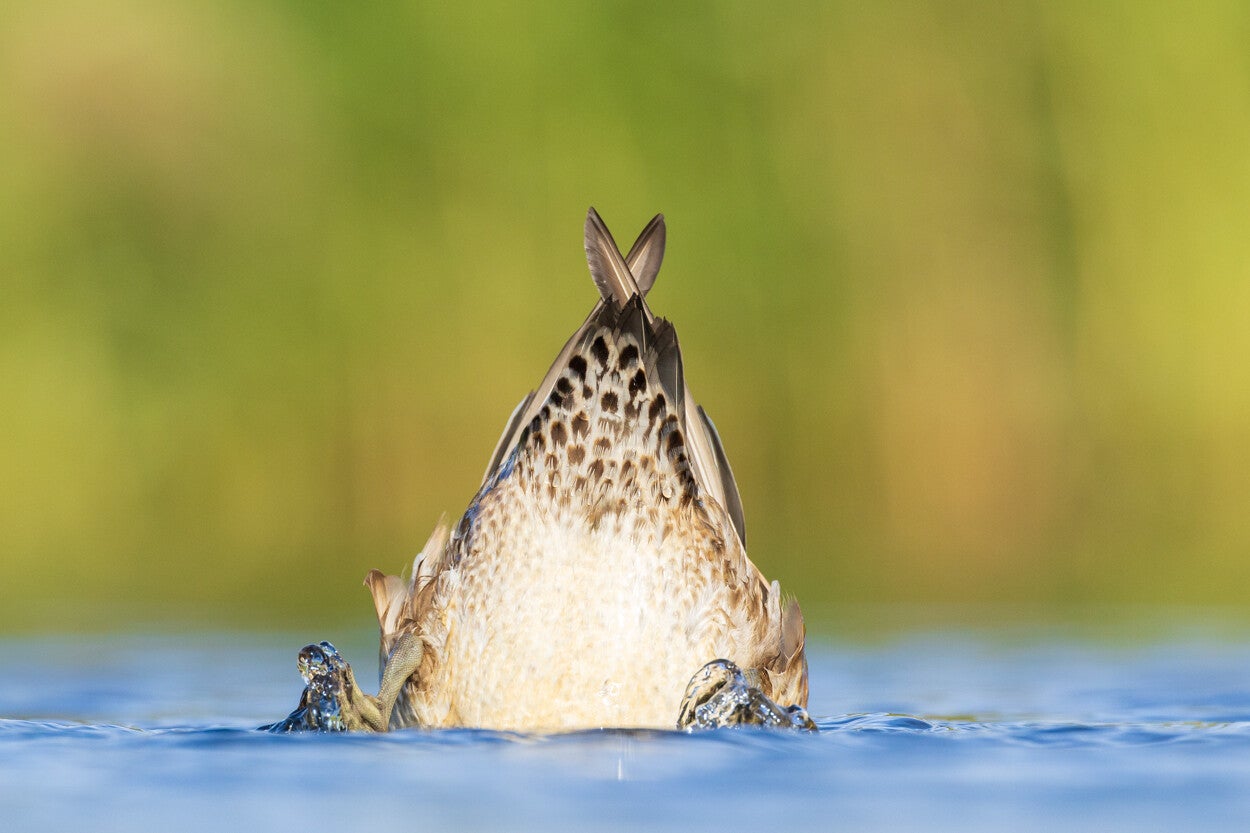
After a coffee break, we checked the ponds (Grillteich and Golfteich), which produced Water Rails, Wigeons, a Teal, and more finches. The sea buckthorn bushes were laden with berries, on which Starlings and Redwings were gorging themselves, while an occasional Mistle Thrush flew past. We walked back along the north beach, photographing the finches, Northern Wheatear, and Starlings much like the day before.
In the afternoon, we returned to the main island and had lunch at the apartment. We checked the site of the Pallas’s Leaf Warbler, which proved uncooperative, though the Redpolls put on a good show.
Along the path, we spotted a Firecrest. We then checked the site for the Isabelline Wheatear, confirming it had departed the island. In the last remaining light, we photographed Chaffinches and Bramblings feeding on seaweed larvae.
We walked along the base of the dunes, hoping to relocate the Pine Bunting that had been reported there while we were on Düne. Two Yellowhammers and a few Reed Buntings set our expectations high, but near the end of the walk, my heart truly skipped a beat: we flushed a Locustella warbler that flew just two meters before dropping back into the marram grass!
In that split second, I thought I caught a glimpse of a darker, contrasting tail indicative of a Pallas’s Grasshopper Warbler—one had been trapped on the island two weeks prior. With trembling hands, I sent a message to the WhatsApp group, and within minutes, birders came running. I tried my best to coordinate everyone (in my best Dutch-German mix) so we could surround the spot where it had landed.
After 15 to 20 minutes, around 200 birders had gathered. With no one else arriving and the bird only visible on thermal optics, we decided to step forward slowly to flush it toward the open beach. Everyone waited nervously, cameras ready. Suddenly, the bird flushed, circled the crowd once, passed right overhead, and dropped into some rose bushes. In flight, I could tell immediately it wasn't a Pallas’s—it lacked the white tail tips, had less contrast, and was visibly larger.
Fortunately, several birders captured clear flight shots, and the identification pointed to an exceptionally late Common Grasshopper Warbler.
Though I was gutted—having dreamed for seven years of finding a Pallas’s Grasshopper Warbler or Lanceolated Warbler—we received many compliments from fellow birders for finding the bird and organizing the crowd so everyone could see it.

Wednesday 21.10.2026
With rain in the forecast, we slept in, enjoyed a relaxed breakfast, and packed our bags for checkout. We left our luggage at Mokka Stube so we could pick it up before taking the 16:30 ferry.
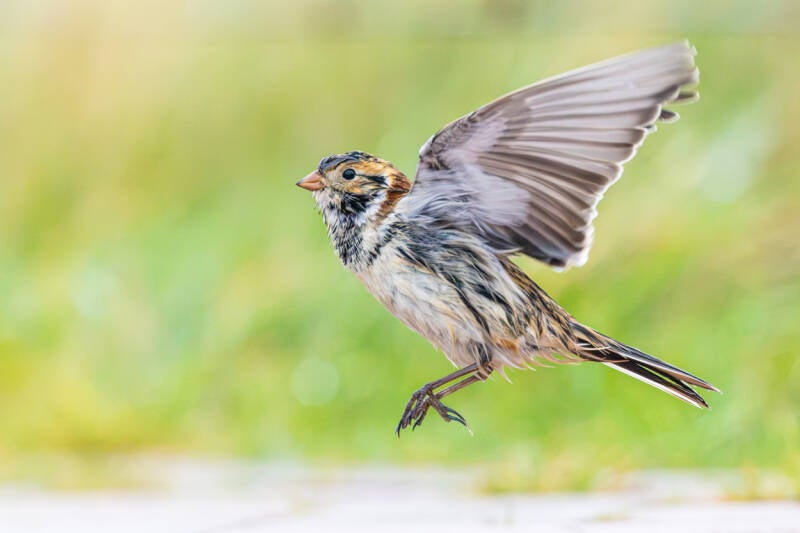
Hans was hoping for a Lapland Bunting on this trip, having missed earlier reports. When news broke of one on the Oberland track, we headed there right away. I didn’t want to rush past promising spots like Kleingarten, so Hans went ahead. I arrived a few minutes later and managed to photograph the bird feeding on the path. Soaked from the rain, it hovered to dry its wings, giving us a great photo opportunity. As expected, the track grew busier, and the bird soon flew off when a runner passed by.
Our final attempt for the Olive-backed Pipit proved disappointing once again; I only caught a brief glimpse of it walking in the grass. It had been reported at Reede earlier, but we found only a cooperative thunbergii Grey-headed Wagtail there.
We decided to check the compost area for Jack Snipe and found several birders looking at the smaller pond. A Jack Snipe was present, but no one had reported it yet, so we sent out an alert—to the delight of many local birders.
Back at the harbor, the Pink-footed Goose was still swimming about, looking near its end, and the Red-throated Diver was still present, unfortunately still troubled by oil on its wing and flank.
We picked up our luggage and made our way to the harbour, though we were briefly sidetracked by a flock of remarkably tame Redpolls. The colorful shipping containers offered bright background contrast, though I preferred the more natural backdrop. At 16:30, we departed the island. With only a few Razorbills and Guillemots visible from the ferry, we retreated indoors to feast on schnitzel, fries, and “Lange Anna” sausage.