Helgoland 2025
According to the RFM marketing prediction model, it was time for Hans and me to visit Helgoland for the sixth time since 2019. This year we were joined by Bouke Atema. Normally, we prefer to go in October, but that month was already packed with other commitments.
October usually offers better chances for rarities, with the main migration of thrushes, Robins, Goldcrests, and Chaffinches passing through. With the right conditions, you can witness a true fall of migrants on the island. Earlier in autumn—September—you get different species that peak sooner, such as Redstart, Willow Warbler, Lesser Whitethroat, and Yellow Wagtail, while still having the chance for interesting rarities.
In the days before our trip, the Helgoland WhatsApp group had been quiet. Only a Hoopoe had been reported, which sadly ended up as Sparrowhawk prey on Friday.

Saturday, 20 September 2025
We boarded the MS Helgoland in Cuxhaven at 09:30. While waiting to embark, numerous passerines passed overhead—Meadow Pipits, White Wagtails, Barn Swallows—and even a few Marsh Harriers, which raised our hopes for what awaited us on the island.
As we sailed out, more birds crossed the North Sea, but the closer we got to Helgoland, the quieter it became—both in the air and on the app. Hours of sea-scanning yielded little, except for a first-calendar-year dark morph Arctic Skua near Düne.
Hans assumed we’d have to haul all our gear up to Oberland, but to our relief, our accommodation was in Unterland. After dropping our bags, grabbing groceries, and having coffee with biscuits, we were off.
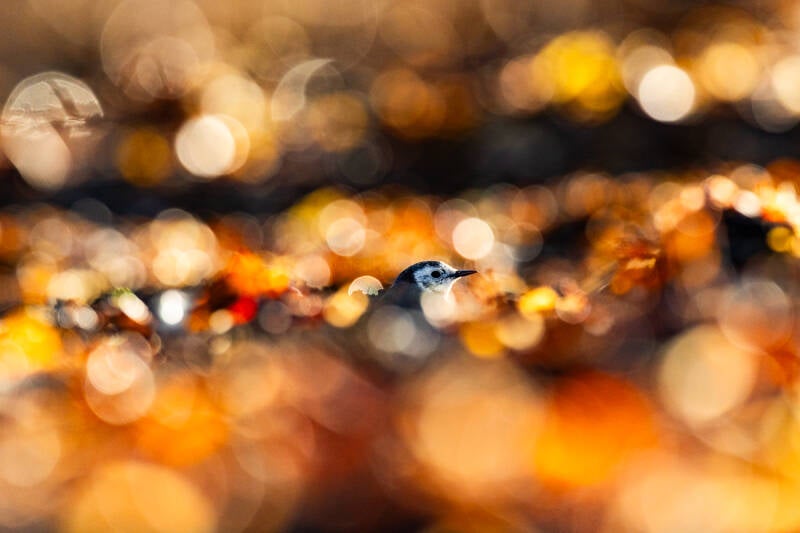
We looped the island counterclockwise from the east harbour (Lesenhalle). A Northern Wheatear and several Linnets fed in the field, while the open pool area was, as always, full of Meadow Pipits. The quay was empty, but at the North Beach we found a Pied Wagtail among the White Wagtails feeding on beach flies and larvae in the rotting seaweed.
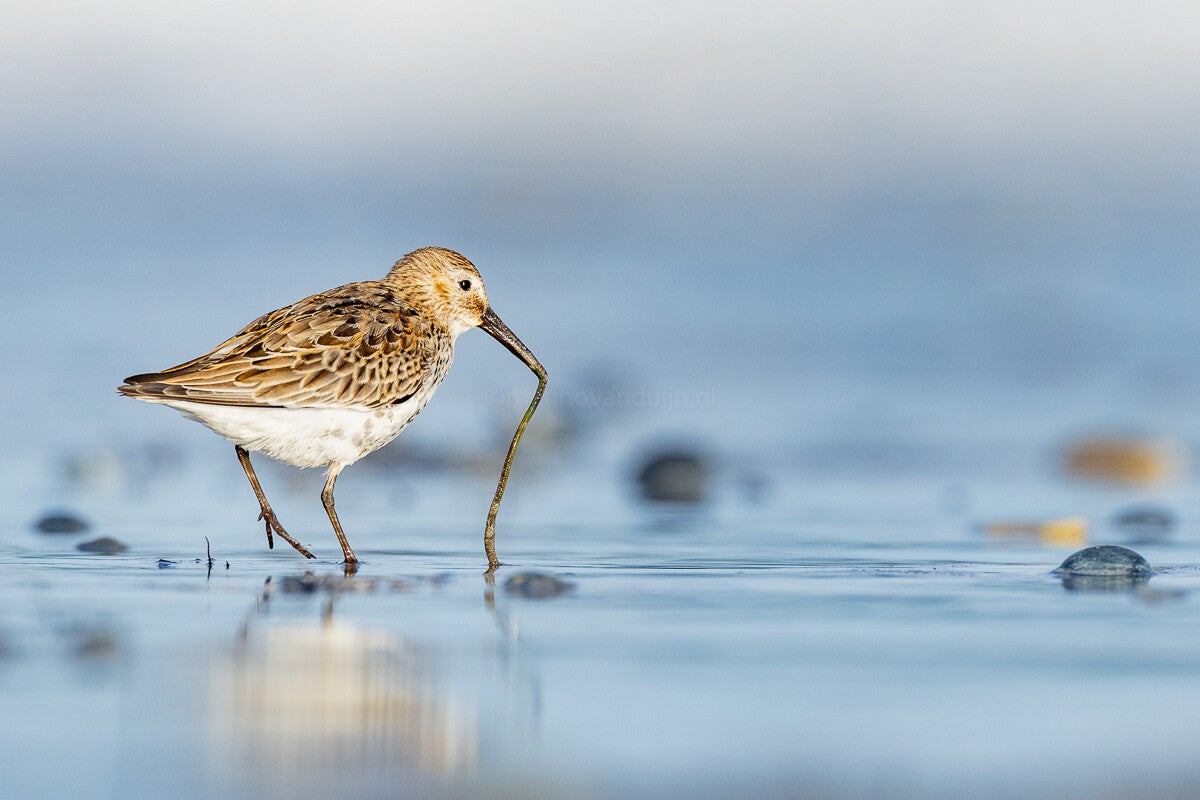
Among the Dunlins and Ringed Plovers was a very cooperative juvenile Little Stint. We spent the rest of the afternoon photographing waders, pipits, wagtails, and the Wheatear as they caught flies—sometimes in midair.

Sunday, 21 September 2025
The wind shifted from south (4 Bft) to west and strengthened to 6 Bft by evening. We started again at the North Beach, arriving before the morning tourists.
The same birds were still around, and a large flock of gulls gathered on the pier, including an adult Yellow-legged Gull, several Caspian, and Mediterranean Gulls. On our way back we checked the compost dump, hoping for a Jack Snipe, but there wasn’t enough water.
After lunch we explored the south side—nothing special apart from a few Lesser Redpolls, Whinchats, and a Stock Pigeon. With the wind picking up, we walked to the northwestern tip to scan for seabirds. A few young Northern Gannets were still on the nests, and adults cruised by the cliffs against dramatic waves. Despite the blustery conditions, we found a sheltered spot. Apart from Gannets, we saw a Whimbrel, a Peregrine Falcon, and several Common Scoters.
After a coffee break, we returned to the North Beach. From the youth hostel we scanned the sea and spotted two distant Sooty Shearwaters. More Sparrowhawks began arriving—some almost flew into us, allowing great photos as they fought the headwind. Between 16:00 and 18:00 we counted 48 individuals.
Flocks of Chaffinches and Meadow Pipits arrived continuously, and a Spotted Flycatcher landed nearby. Even during dinner at the Aquarium Restaurant, Sparrowhawks were still arriving after sunset.

Monday, 22 September 2025
The wind turned northwest and dropped slightly. After a clear night, we noticed new arrivals—our first Goldcrest, a Pied Flycatcher, and a Redstart at Kurpark, where we began our morning round. Despite our efforts, nothing particularly rare turned up. Mittelland yielded some Lesser Whitethroats and Garden Warblers, while Oberland added our first Brambling, a Hawfinch, and more Whinchats.
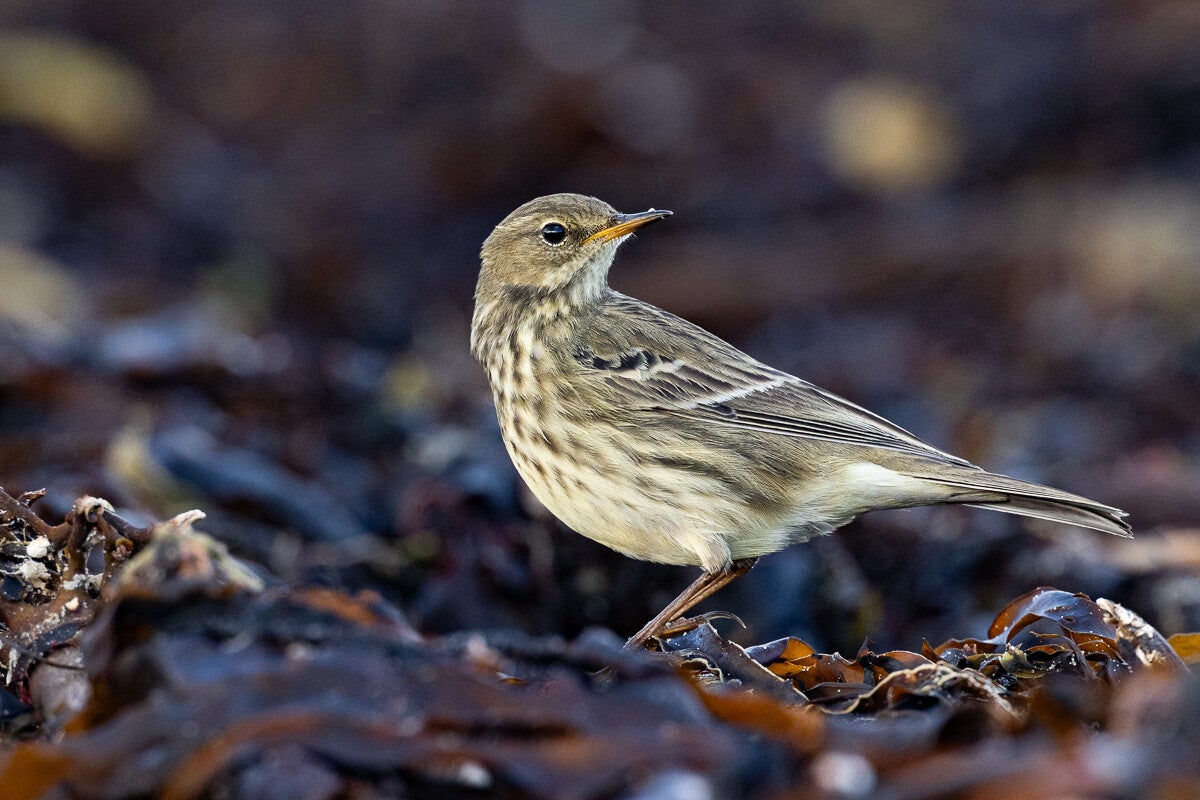
We spent the last hours of daylight photographing pipits and wagtails in the soft backlight. Notably, there was a fall of Rock Pipits—outnumbering Meadow Pipits in some spots. We estimated around 40–60 Rock Pipits along the beach, compared to the usual 4–6.
Tuesday, 23 September 2025
The wind continued clockwise, now from the northeast, so we took the first ferry to Düne. As dawn broke, Song Thrushes, Redwings, and Chaffinches arrived in numbers. A Common Sandpiper on the pier was our first ever for Helgoland.
The south and east beaches were quiet—as usual—but we had good photo opportunities with Golden Plovers and Shore Larks. At the northeast pier, many pipits and wagtails gathered, joined by Barn Swallows, House Martins, and Sand Martins—a lively scene. Despite careful scanning, nothing unusual turned up, so we spent time photographing waders at low tide.
Halfway back, we found a Snow Bunting, but it was soon flushed by tourists hunting for pebbles and seals. Then came a rarity report—a Short-toed Lark at… the northeast pier, exactly where we’d just been! The bird was shy and uncooperative for photos, unlike previous years, so we moved on. Another Helgoland first for us followed: a Mute Swan flying overhead.
A Tree Sparrow at Golfteich turned out to be a local rarity, which we only learned after submitting the sighting—it was relocated the next day. I spent some relaxed time at both Golf- and Grillteich (each with a viewing platform), where only common migrants appeared: Spotted Flycatchers, Willow Warblers, and a Reed Warbler. A juvenile male Wigeon made a nice photo subject.
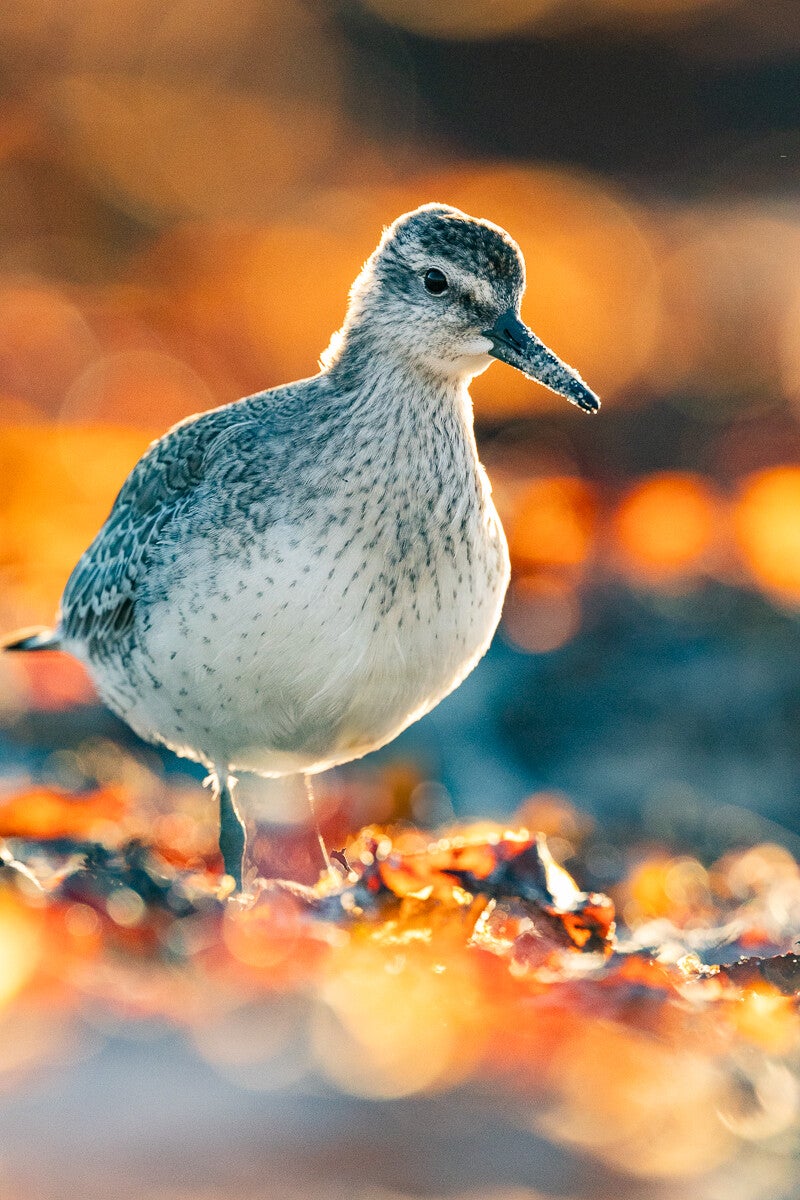
We slowly made our way back to the ferry, catching more action shots of birds chasing beach flies. Back on Helgoland, we repeated our island loop and once again photographed the same birds in golden backlight.

Wednesday, 24 September 2025
We’d been looking forward to this day,not because it was our last, but because the wind had finally turned easterly (4 Bft). Expectations were high.
At sunrise, migration was in full swing: thrushes, pipits, and finches streaming overhead. At the quay we counted six Redstarts and many Chiffchaffs in the vegetation. A few Tree Pipits, several Great Spotted Woodpeckers, and a juvenile Spoonbill—all new for our Helgoland list, added excitement.
We searched every corner of the island but mostly found more Blackcaps, Robins, and Chaffinches. At Oberland we called in a Ring Ouzel, and at Mittelland, Sparrowhawks repeatedly chased smaller birds back into cover. To our disappointment, it looked like our first Helgoland trip without a single Yellow-browed Warbler.
Even our best “pishing” at Kurpark brought only more Chiffchaffs, Redstarts, and Pied Flycatchers—no Siberian gems among the European bulk species. As the hours slipped away, we packed up.
A White-tailed Eagle provided a parting surprise—another Helgoland first for us—followed by a Short-eared Owl debating whether to stay on Helgoland or cross to Düne; it chose the latter.
Like the birds, we’d also fattened up—though in our case with a greasy pizza—before returning to the mainland. A Hawfinch watched us from above, seemingly comparing waistlines and judging our lethargy, unaware that we’d walked around 15 km per day in search of migrants.
Will there be a next year? Maybe not… until autumn FOMO strikes again.



Left: trash photographers, Hans Overduin and me (photo Bouke Atema).
Middle: Hans's reaction after me getting between him and the Snow Bunting
Right: Bouke, also sharing his thoughts
click on the photo below to enlarge